How to sign off a sympathy card for a funeral
Wondering how to sign off a sympathy card for a funeral? We share several examples to help you find the right words.
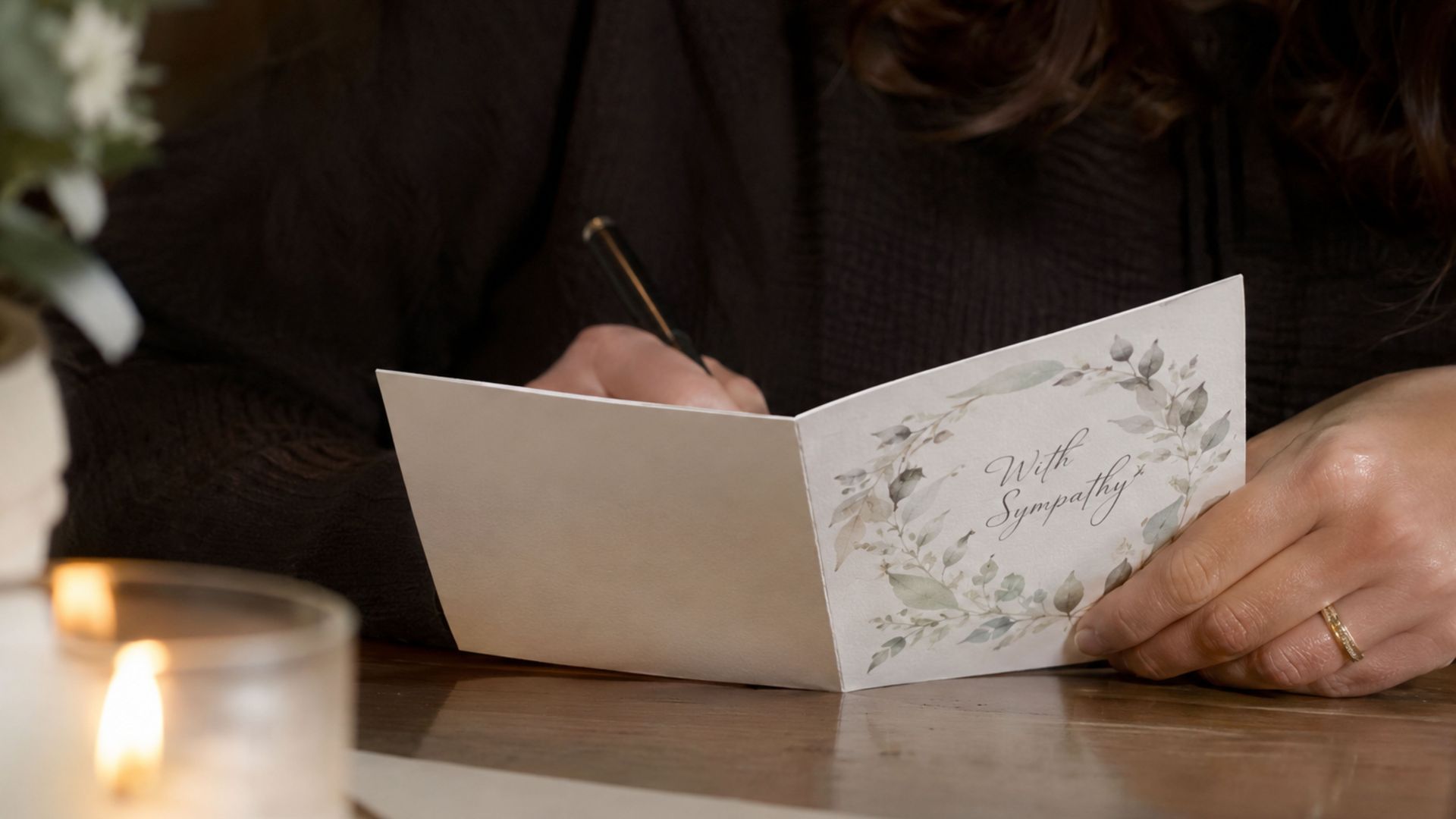
Lots of thought and heartfelt wishes go into writing a sympathy card. You want to help the grieving person get through this difficult time while honouring the person who has died.
Your relationship with the card's recipient can change what you write. That goes for the sign-off just as much as the main message of the card.
This guide should help you write an appropriate sympathy card sign-off for a funeral. We've included different options to help you choose the right message for your situation.
What are sympathy cards?
A sympathy card is sent to someone who has recently experienced the death of someone close to them. They may have lost a parent, sibling, partner or even a beloved pet. It's a thoughtful way to offer comfort and express sympathy and condolences.
How to write a sympathy card for a funeral
Sending a sympathy card for a funeral can provide comfort to a grieving person or family.
They will be experiencing a very heavy and emotional time. Acknowledge this appropriately for your relationship. Show that you understand what they're going through and share a kind thought about the person who has died. You can offer support that doesn't need a response.
The message should be short but personalised to honour the person who has died.
How do you sign off on a sympathy card for a funeral?
The way you sign off a sympathy card can change depending on your relationship with the recipient.
How well you know the grieving person should guide what you write. For instance, you might write something very different for a close friend than if you were signing off a sympathy card on behalf of a business.
To help you choose the right sign-off, we've listed examples for different groups of people.
How to sign off a sympathy card for family or very close friends

If you're very close to the grieving person (a relative, say, or a close friend), sign off the sympathy card with something warm and natural. You'll want to make it affectionate and personal. Most of the time, you won't be expected to write something formal.
Here are some examples:
- "With love" or "With all my love" expresses your affection honestly without being over the top. It doesn't ask for anything in return. They don't need to thank you. It simply reminds them that you care.
- "Thinking of you always" reminds them they're not alone in their grief. You're also hinting that you'll be there for them in the long term. You understand their loss is permanent and not something they can move on from quickly.
- "I'm here whenever you need me"
reassures the grieving person that you'll be there for them on their terms. Grief doesn't follow a set path, and it's different for everyone. Offering them support when they're ready subtly acknowledges that.
How to sign off a sympathy card for friends, extended family or colleagues
For grieving people you're fond of but not overly close to, it's about finding the right balance of warmth and respect. You want to let them know you're there for them without overstepping any boundaries. On the flip side, you also need to be careful not to be too informal.
Here are some examples:
- "Thinking of you" or "Thinking of you and your family" can work well. They let the grieving person know they're on your mind without demanding a response.
- "Sending you gentle thoughts" is a quiet and soft way to let the person grieving know you're thinking of them.
- "With warmth and sympathy"
might suit a grieving distant relative or colleague. It's gentle and supportive without being overly familiar, like "with all my love" might be.
How to end a sympathy card for formal or professional relationships

Are you signing off a sympathy card for someone you only know professionally (a manager, say, or client)?
In this case, it's generally best to keep it respectful and dignified. You want to express sympathy for their loss without being overly familiar or unprofessional.
Here are some examples:
- "With deepest sympathy" is a traditional choice that feels professional. You're showing respect for their loss and grief without overstepping the mark.
- "Please accept my sincere condolences"
works for expressing sympathy and sadness politely, especially for a colleague or client you don't know well.
How to sign off on a condolence card from a business or group of coworkers
If you've sent a sympathy card around the office for a grieving colleague or client, it's good to express sympathy in solidarity.
Here are some examples:
- "Please accept our deepest condolences" is probably the most common way to sign off a sympathy card in the corporate world. It's professional and shows the grieving person they have a group of people offering them support.
- "From everyone at [name of company/department]"
is another professional option. Following a sincere message of sympathy, it can be a simple and warm way to show the grieving person they're not alone.
Once you've chosen a sign-off, it's time to add the names. If there are only a few of you, you can pass the card around for everyone to sign. For larger teams, it's usually better to state a group name – for example, "The Marketing Team at [business name]".
We hope this helps you sign off your sympathy card for a funeral in a way that's genuine for you and your relationship to the recipient. Follow the AFD blog for more funeral ideas and advice.