How soon after death is the funeral?
How long do people usually wait before holding a funeral? Is there a time limit? And what can cause delays? Get the answers in our guide.
If a person you know has died or you expect to be planning a funeral soon, you probably have lots of questions. That's normal.
One of the most common questions is, 'When someone dies, how long after is the funeral?'
The short answer is that there is no fixed deadline. However, most traditional UK funerals take place one to two weeks after the person dies.
In this guide, we explain:
- Typical waiting periods for funerals in the UK
- What has to happen before a funeral takes place
- What can delay a funeral service
How long after death does a funeral take place in the UK?
For a traditional UK funeral in a church, crematorium or cemetery, the typical waiting period is one to two weeks.
However, there's no fixed deadline. Some funerals take place within a day or a few days. Others happen several weeks after death. Both are perfectly normal.
The timing depends on several things, including paperwork, the circumstances of the death and the family's wishes or religious beliefs. In Islam, for instance, funerals usually take place within 24 hours.
The most important thing to know is that there's no rush. If you're planning a funeral, your funeral director will take care of the person's body while you make arrangements together.
Typically, the family will agree on the funeral date with the funeral director and the person leading the service.
What has to happen before a funeral can take place?
There's a set process when a person dies. It typically looks like this:
- A doctor confirms the death.
- A medical examiner confirms the cause of death.
- The family can then register the death.
- The local registrar provides the documents needed for burial or cremation.
Once these steps are complete, the family can go ahead with funeral arrangements.
It's worth noting that, while there's no time limit on funerals, there is a time limit to register a death. This is five days in England, Wales and Northern Ireland. In Scotland, it's eight days.
You may also be involved in probate. This is the process where the person's money, property and possessions are shared according to their will.
You do not have to wait for probate to be completed before arranging the funeral.
Learn more about
how to organise a funeral and
how to register a death.
What can delay a funeral?

Sometimes, family members choose to wait before holding the funeral. That could be because they need time to plan a more personalised or elaborate funeral service. It could also be for religious or cultural reasons, or simply down to personal preference.
There can also be delays for reasons outside the immediate family's control. That might include:
- A coroner's investigation:
this is when a specially trained judge (a coroner) investigates how a person died. Coroner's investigations typically take four to 12 weeks, but they can take longer.
- Crematorium or cemetery availability: the family might have to wait for a church or crematorium to become available or organise a grave plot.
- The celebrant or officiant's availability:
the person leading the funeral might be busy until a certain date.
- Travel plans:
family members may need to make travel arrangements. This can cause delays, especially if relatives are travelling from abroad to attend the funeral.
- Repatriation:
if the person died abroad, the family may need to make arrangements to bring their body home. Or they might have died in the UK and need to be repatriated to their home country. In either case, the process can take several weeks.
How long can you wait for a funeral after death?
There is no legal time limit on organising a person's funeral.
Funerals can take place weeks after a person's death. In unusual cases, there may be longer delays because of legal investigations, repatriation or other practical issues.
Funeral directors and mortuaries can continue to care for the person's body during these delays. If more time is needed, specialist facilities can be used. Embalming (chemical preservation) may also be offered, but it's not usually required in the UK. It's normally up to the family whether to embalm a person's body.
If a funeral is very delayed, families sometimes choose an earlier burial or cremation before holding a separate memorial service later.
How soon are funerals in different religions?
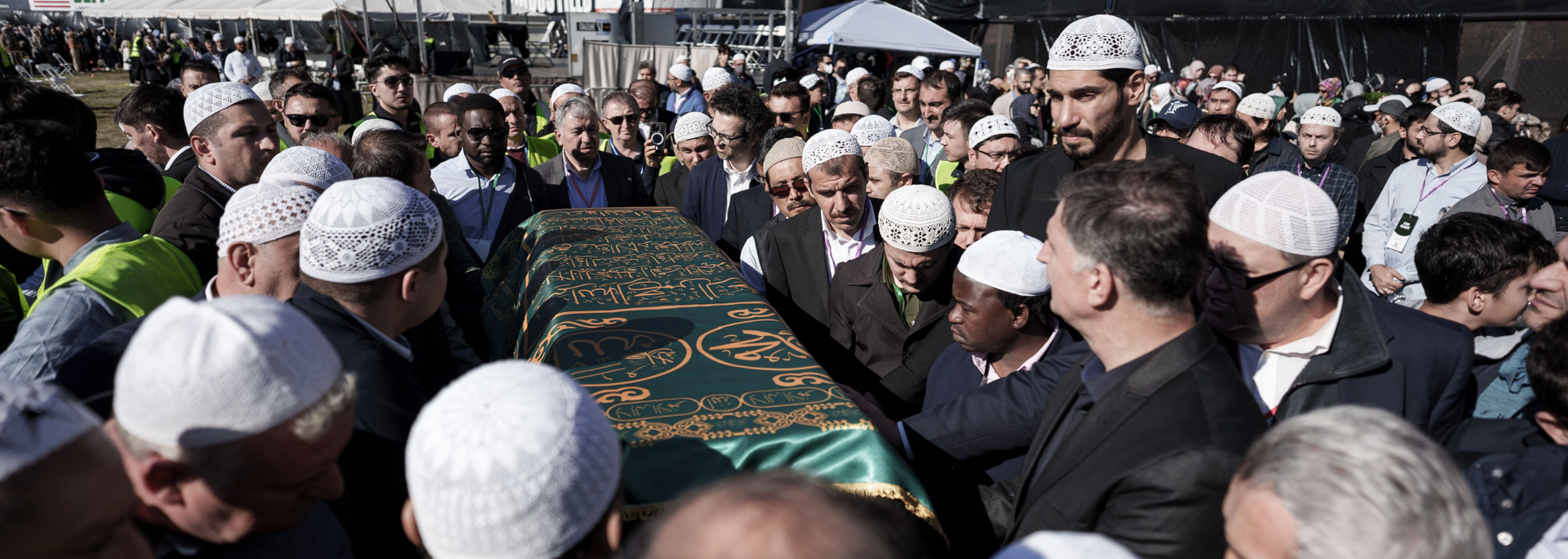
On average, traditional UK funerals take place within one or two weeks. But the beliefs of the person who died or their family can change timings significantly.
Often, that's because certain religious customs place more emphasis on burying a person quickly.
Let's look at how funeral timings can vary across different religions in the UK.
How many days after death is an Anglican funeral?
Anglican (Church of England) funerals tend to follow the usual pattern in the UK. There are no religious restrictions on when to hold the funeral, and most take place within one or two weeks.
How many days after a death is a Catholic funeral?
As with Anglicanism, there's no fixed time limit for a Catholic funeral.
However, there may be practical reasons why a Catholic funeral takes longer to happen. Catholic beliefs prefer burial over cremation – and they tend to include a full funeral Mass, not just a funeral service. That can delay arrangements depending on church and burial plot availability.
How many days after death is a Jewish funeral?
In traditional Jewish practice, families aim to bury their loved ones as soon as possible.
That's why Jewish funerals in the UK are typically arranged through a local synagogue. They're set up to organise funerals very quickly.
How soon after death is a Muslim funeral?
As with Judaism, Islamic tradition says to bury the body as soon as possible – ideally within 24 hours.
Mosques often help families arrange funerals quickly. There are also specialist Muslim funeral directors and council services that are set up to arrange quick burials.
AFD is a London funeral director serving families throughout Greater London. For more guides on funeral planning and attending a funeral, visit our blog.