What do funeral directors do?
When a person dies, what are a funeral director's responsibilities? Find out what they do and how they help.

When a person dies, there's usually a funeral service. This can be arranged by the executor – the person named in the will – or by a professional.
Most of the time, people hire a professional funeral director. It's their job to help with the practical tasks, paperwork and organisation needed to carry out the funeral.
Funeral directors also provide compassionate guidance at an emotional time. They're there to offer step-by-step advice at your pace, so you can plan a funeral service that feels right for the person who died.
But what, exactly, are their day-to-day responsibilities? Here's a breakdown of the role so you know what to expect.
A funeral director's responsibilities
1. Transporting the person who has died
One of a funeral director's main jobs is to bring the person who has died into their care. This involves transporting the person's body from a home, hospital, care home or hospice to the funeral home.
2. Looking after the person's body
Once the funeral director has taken the person into their care, they will look after their body. This involves keeping them in a safe, secure and dignified environment.
The body will be prepared for burial, cremation or, in some cases, a viewing. In all cases, this will involve washing and dressing the body to help create a peaceful appearance. In some cases, the body will be
embalmed.
3. Helping with paperwork
Perhaps the main responsibility of a funeral director is to help the family arrange the funeral. This process has many steps.
First, they will guide the family through all the relevant paperwork, explaining what needs to be done. They will contact the crematorium or cemetery and other organisations. The family will need to complete some of these tasks themselves.
4. Helping choose the right type of funeral
The funeral director will give the family options for the type of funeral service. The main options are burial and cremation.
In the case of cremation, you can choose between cremation with a service or direct cremation. This is a type of cremation where there's no funeral service, and people don't go to the crematorium.
With burial, there are different locations where a person can be buried. These include churchyards, council cemeteries and green burial spaces.
5. Helping to plan the funeral service
The family needs to make decisions about:
- The date and location of the funeral
- The hearse and other funeral vehicles
- The coffin
- Flowers
- Music
- Readings
- Orders of service
It's the funeral director's job to guide the family with patience and compassion as they make these decisions.
They can help you choose music, readings and religious texts. They will also work with the celebrant or religious minister to ensure the service corresponds to your wishes.
6. Helping on the day of the funeral
The funeral director is also involved on the day of the funeral service. They will usually collect the coffin and transport it to the venue. They'll often arrange the procession and carry or accompany the coffin.
7. Helping after the funeral
After the funeral, the funeral director will often hold cremated remains for the family to pick up later. These can be stored or scattered.
They will also tie up some administrative loose ends. Often, this includes passing on any charitable donations collected during the service, taking care of floral tributes and finalising accounts.
Finally, they may offer some aftercare for their clients. For instance, they may make a follow-up call to check on the family. Or they might provide information about bereavement talking therapies and other kinds of support.
What don't funeral directors necessarily do?
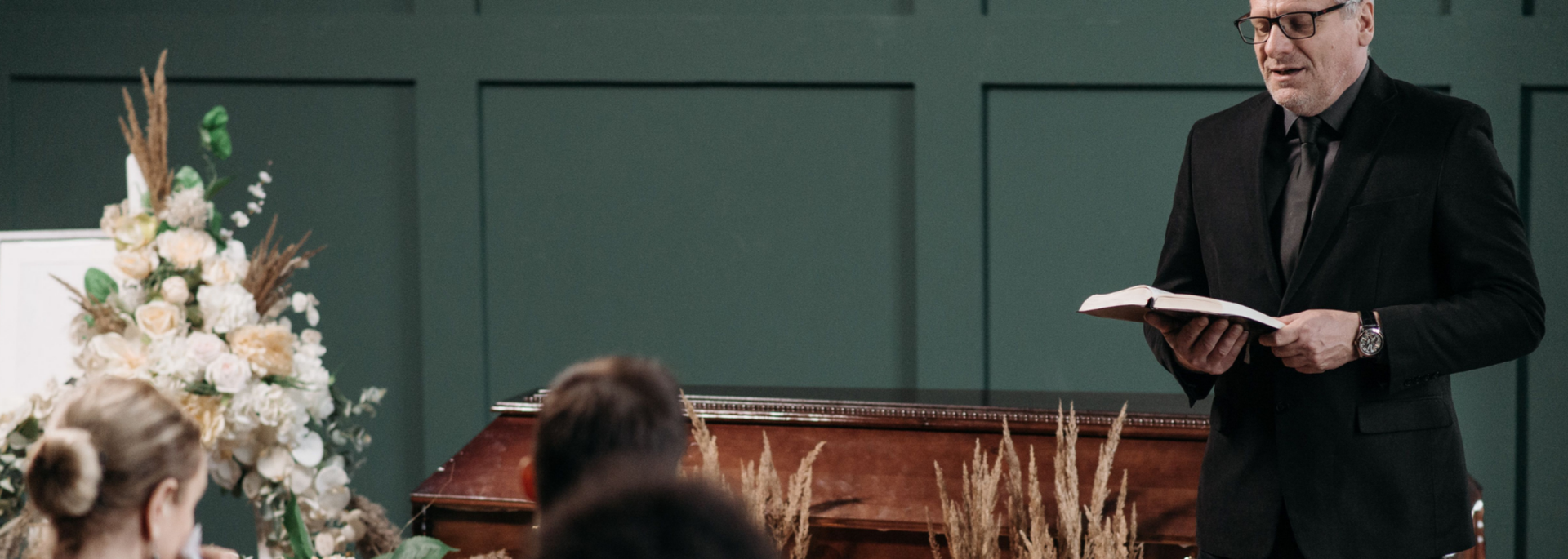
Funeral directors have many different roles. There are, however, other people involved after a person dies. That can include doctors, coroners, registrars and ministers.
Funeral directors don't handle the medical cause of death or investigate why a person died. This is the coroner's responsibility. A coroner is an independent official whose job is to find out who died and when, where and how it happened.
They also don't register the death. This is done by the family, who must contact a registrar's office themselves.
In general, the funeral director doesn't act as a celebrant. The funeral director focuses on arranging the funeral while the celebrant writes and leads the ceremony itself.
Finally, it's worth pointing out that no one has to use a funeral director. Anyone can arrange a funeral. For many people, however, working with a funeral director relieves a lot of stress and helps things go smoothly.
What makes a good funeral director?
In our view, a good funeral director combines two key qualities: compassion and organisation. They recognise that their clients are going through a tough time and offer a compassionate, listening ear. Meanwhile, they manage a wide range of legal tasks and paperwork promptly and accurately.
How do you know if a funeral director is legitimate?
When looking for a funeral director in the UK, it's important to know that you're working with someone who'll do a good job. This is especially important in England, Wales and Northern Ireland where funeral directors aren't legally regulated.
Look for accreditation from the National Association of Funeral Directors (NAFD) or the National Society of Allied and Independent Funeral Directors (SAIF).
It's important to search for the funeral director on the NAFD or SAIF website rather than just looking for a logo on the company's website. Confirming membership gives you peace of mind that they will follow a code of practice and undergo regular inspections.
AFD is an independent funeral director based in London. We provide a compassionate service and a listening ear at all stages of the process and work with people from all faiths and walks of life. If you need our support, please call whenever you're ready on 020 8355 7876.